Show, Don't Tell: The Quiet Art of Training Someone to Work the Deli Counter
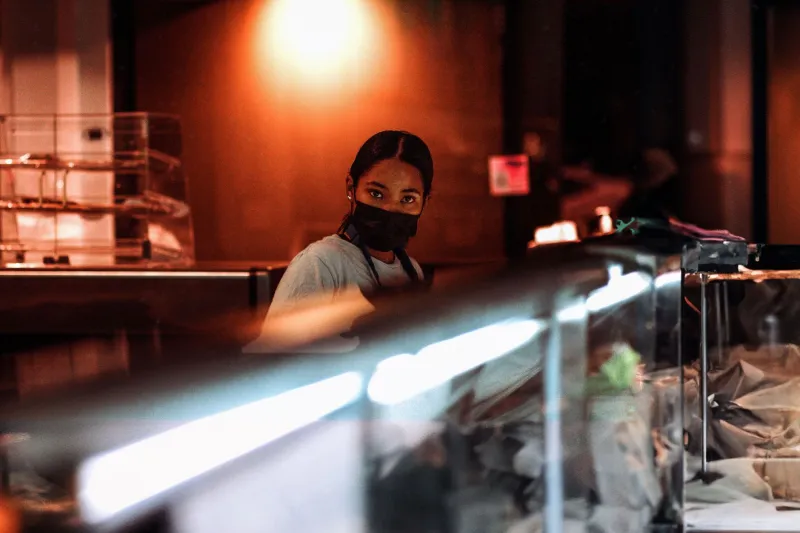
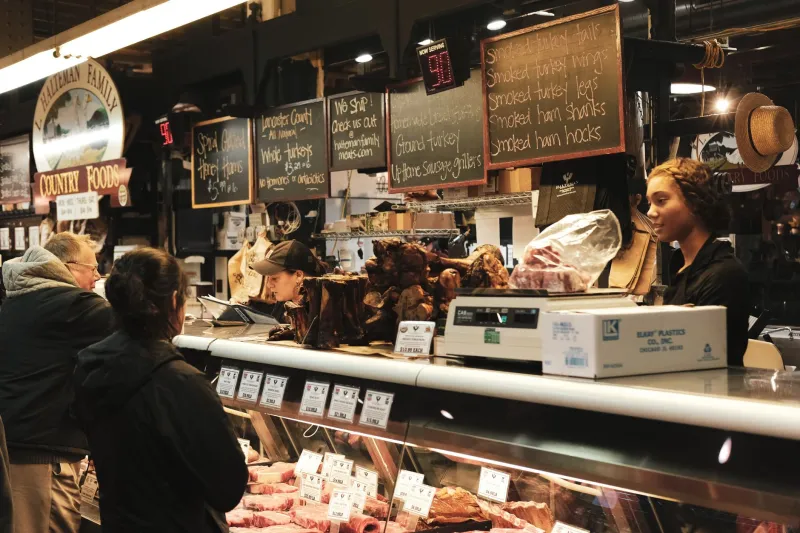
Rosario has worked the same deli counter in South Philly for going on twenty-two years. She knows the slicer the way a musician knows their instrument — which settings run a little hot, how far you can push the blade before the prosciutto starts to tear, when to wipe it down without being asked. She doesn't think about any of this consciously. She just does it.
So when a nineteen-year-old named Marcus showed up for his first week behind the counter last spring, she had to do something she hadn't done in a long time: think about what she knows.
"That's the hardest part," she says, leaning against the prep table during a slow Tuesday afternoon. "You forget that you learned all of this. You think you were just born knowing how thick to cut the turkey."
You weren't, of course. Nobody was.
The Stuff That Doesn't Make It Into the Employee Handbook
Every deli has a version of the same onboarding process: food safety certification, a walkthrough of the equipment, maybe a laminated sheet of the most popular orders. That part's easy. It's the other stuff — the knowledge that lives in the hands and the gut — that takes months to transfer and can't be written down on anything.
How do you explain the difference between a customer who wants to chat and one who wants their order and a clear exit? How do you describe the exact moment when a pastrami is sliced at the right temperature versus when it's still a little cold and will fall apart on you? How do you teach someone to read a line of six people and already know who's going to be difficult?
You don't explain it. You stand next to someone and let them watch it happen. Then you let them try. Then you watch them get it wrong, and you figure out how to say something useful without making them feel like an idiot.
That last part, several veteran counter workers told us, is where most training either succeeds or falls apart.
The Patience Nobody Talks About
Derek has managed the deli section of a family-owned grocery store in suburban Columbus for eleven years. He's trained somewhere around thirty people in that time. He keeps a rough count.
"The ones who make it," he says, "they're not always the ones who pick things up the fastest. Sometimes the fast learners get cocky around week three and start cutting corners. The ones who stick around are usually the ones who stay a little bit humble about how much they don't know yet."
He pauses, then laughs. "Which is a lot. It's always a lot."
Patience runs in both directions during deli training. The veteran has to resist the urge to just take over when a new hire is fumbling with an order. The trainee has to resist the urge to fake competence they haven't earned yet. Both of those instincts are completely human, and both will slow the whole process down if they go unchecked.
Rosario says the moment she knew Marcus was going to be fine was when he came to her midway through his third week and said, "I think I've been wrapping the sandwiches wrong. Can you show me again?"
"Most people," she says, "would've just kept doing it wrong and hoped nobody noticed."
What Gets Lost When Nobody Passes It Down
There's a real cost when institutional knowledge doesn't get transmitted. It's not just about efficiency or order accuracy — it's about the character of the place itself.
The particular way a deli handles its regulars, the unspoken priority given to a customer who's been coming in since the place opened, the small gestures that make someone feel like a neighbor instead of a transaction — that stuff is fragile. It doesn't survive a high turnover rate. It doesn't survive a training process that's purely transactional.
At a deli in Crown Heights, Brooklyn, a woman named Gloria who's been behind the counter for sixteen years describes it as carrying a flame. "You have to actually care about passing it," she says. "If you're just trying to get someone up to speed so they can cover your shifts, that's not training. That's just babysitting."
The delis that feel like something — that have a texture and a personality that makes you want to come back — tend to be the ones where someone took the time to actually mentor, not just instruct.
The Frustration Is Part of It
Let's not romanticize this entirely. Training someone at a deli counter is also, frequently, exhausting.
The lunch rush doesn't slow down because someone is learning. Customers don't lower their expectations because there's a new face behind the glass. And when a trainee makes a mistake that costs time or product or — worst of all — a regular's goodwill, the veteran feels it.
Derek admits there have been moments where he had to walk to the back cooler and take a breath before he said something he'd regret. "It's not the mistakes that get to you," he says. "It's the same mistake, three days in a row, after you've already talked about it twice. That's when you really find out how patient you actually are."
But most of the veterans we talked to said those frustrating stretches are also when something important happens — when the relationship between trainer and trainee either deepens into something real, or doesn't.
"If you can get through somebody messing up the same order four times and still want them to succeed," Gloria says, "then you're actually invested. And they can feel that. It changes how they work."
The Pride Nobody Really Admits To
Here's the part that tends to go unsaid: there is something genuinely moving about watching someone you trained find their footing.
Marcus is eight months into the job now. Rosario says she caught herself watching him handle a complicated custom order last week — six different meats, specific thicknesses, a customer who changed her mind twice — and feeling something she struggles to name.
"Pride, maybe," she says. "But also like... relief? Like, okay. This is going to keep going. Somebody else knows how to do this now."
That continuity — the sense that what you've spent years building won't disappear when you're gone — turns out to be one of the quiet rewards of working a counter long enough to train someone else. You're not just making sandwiches. You're making the next person who makes sandwiches.
And at a neighborhood deli, that matters more than most people realize.
Next time you're waiting at the counter and you see a veteran worker guiding a new hire through an order, take a second to appreciate what you're watching. That's years of knowledge moving from one set of hands to another. It's not a small thing.