Step Up to the Counter: How to Order at a Deli Without Looking Like You've Never Done It Before
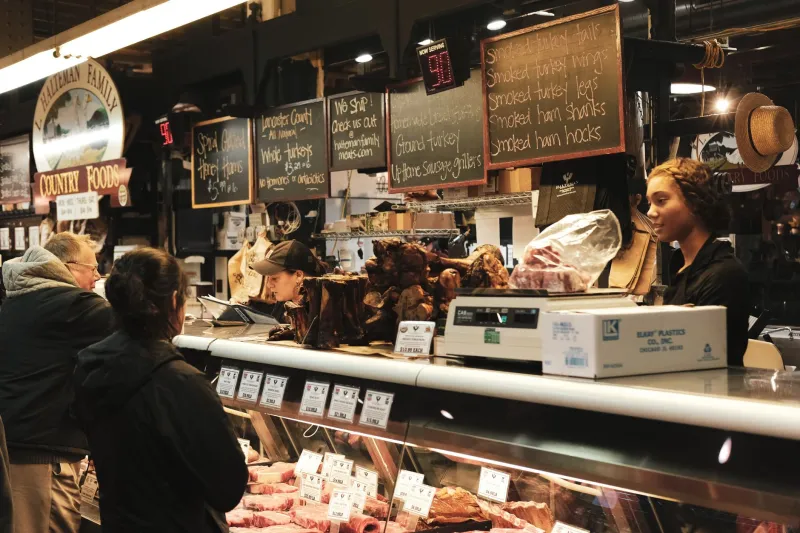
There's a specific kind of social anxiety that only exists at the deli counter. You're next in line. The person behind the glass is already looking at you, marker in hand, ready to write your number on a slip of white paper. And suddenly your brain empties out like a bag of chips someone shook upside down.
What was I going to get? What does "hand-sliced" actually mean? Is it weird to ask for a taste? What's the difference between the two pastrami options?
Relax. You're not alone. And honestly, this stuff is learnable. Let's walk through it.
Read the Case Before You Get to the Front
This sounds obvious, but it saves everyone — including you — a lot of time. Most deli cases are designed to be browsed. The meats are labeled, the cheeses have little cards, and the prepared foods usually have names that tell you something. Use the wait time productively.
Scan what's in the case. Notice what looks freshest — the stuff that's been just sliced or just set out tends to have a different sheen to it. If something catches your eye, mentally note it. You don't need to have your entire order locked in, but having a direction in mind before you're face-to-face with the counter pro makes the whole interaction smoother.
If you're at a place like M&M Deli where the menu's got some depth to it, take a beat to actually read the board. Not speed-read. Read. The names of sandwiches often tell a story — regional influences, house specialties, things named after someone's grandmother. That context matters.
Know Your Thickness (And Don't Be Afraid to Say It)
One of the most underused powers you have at the deli counter is the ability to request your slice thickness. This is not a fussy ask. This is a legitimate, expected part of the transaction.
Paper-thin? Say so. That's great for certain Italian deli meats where the fat marbles through the slice and you want it to melt on the bread. Medium? Also valid — it holds up better in a stacked sandwich, gives you something to actually chew. Thick-cut? Absolutely. Some people want their turkey to have presence. There is no wrong answer here, only preferences.
If you genuinely don't know what you want, try this: ask the person behind the counter what they'd recommend for the way you're planning to eat it. "I'm making a sandwich with rye and mustard" tells them a lot. They'll steer you right.
Decode the Jargon Without Embarrassment
Deli menus have their own vocabulary, and it's totally okay not to know all of it. A few things worth having in your back pocket:
Chub: A large cylinder of deli meat, typically vacuum-sealed. When the counter person says they're pulling from a fresh chub, that's a good sign — it means the meat hasn't been pre-sliced and sitting around.
Lace: The fat running through certain meats. You'll hear this at Italian delis especially. It's not a flaw — it's flavor.
Pressed: Refers to a sandwich that's been griddled or pressed after assembly. If you see it on the menu and you're not sure, it's generally going to be warmer and a little crunchier on the outside.
House-made: Exactly what it sounds like. If a deli is making something in-house — their own roast beef, their own chicken salad, their own pickles — that's usually the thing to get.
When in doubt, just ask. "What does that mean?" is a perfectly acceptable question. A good deli worker will explain without making you feel like an idiot. And if they do make you feel like an idiot, that tells you something important about that deli.
When to Trust the Pro Behind the Glass
Here's a skill that separates the confident deli-goer from the anxious one: knowing when to hand the wheel over.
If you walk in and you're genuinely unsure — you've never been to this particular spot before, the menu is longer than you expected, or you just don't have a strong craving pulling you in any direction — try this move. Tell the person what you're in the mood for in broad strokes. "Something hearty." "Something lighter, maybe with vegetables." "I want something that's going to hold me until dinner."
Counter pros hear this all the time, and most of them enjoy the creative latitude. They know what's been selling that day. They know what came in fresh. They know which combination is going to make you come back tomorrow. Let them work.
This isn't weakness. It's actually the savvy move. The regulars who look effortlessly at home at the counter? Half of them got there by asking good questions and listening.
The Tasting Question
Can you ask for a taste? Yes. Absolutely yes. Most delis — especially good ones — will offer a small sample of a meat or cheese if you're deciding between two things. The key is to ask during a reasonable lull, not when the line is backed up to the door on a Saturday morning.
Also, be decisive once you've tasted. Don't taste four things and then walk away. That's the one move that'll actually earn you a look.
Quantities: How Much Is Enough?
This is where a lot of people freeze. "How much do I need?"
Here's a rough guide: for sandwiches at home, plan on about a quarter pound of meat per sandwich. If you're feeding a crowd or want leftovers for the week, a half pound to a pound goes further than you'd think once it's sliced thin. For cheese, a quarter pound is usually generous for two to three sandwiches.
If you're genuinely unsure, just say how many people you're feeding or how many sandwiches you're making. The person behind the counter will size it up in about two seconds and give you a number.
One Last Thing: Be Ready When Your Number's Called
This is the cardinal rule of deli counter etiquette, and it applies everywhere from a neighborhood spot to a busy city deli: when your number is called, be present. Don't be mid-scroll. Don't be in a side conversation that requires you to hold up a finger while you finish your thought.
The deli counter runs on rhythm. When someone steps up ready, the whole thing flows. When someone steps up confused, the whole line feels it.
But here's the grace note: even if you fumble — even if you forget what you wanted or mispronounce something or ask a question that gets a gentle correction — it's fine. People who work deli counters have seen everything. They're not keeping score.
You just showed up, you're trying, and you're about to eat something really good. That's the whole point.