From Crust to Crumb: Why the Bread Under Your Deli Sandwich Is the Most Important Decision Nobody's Talking About
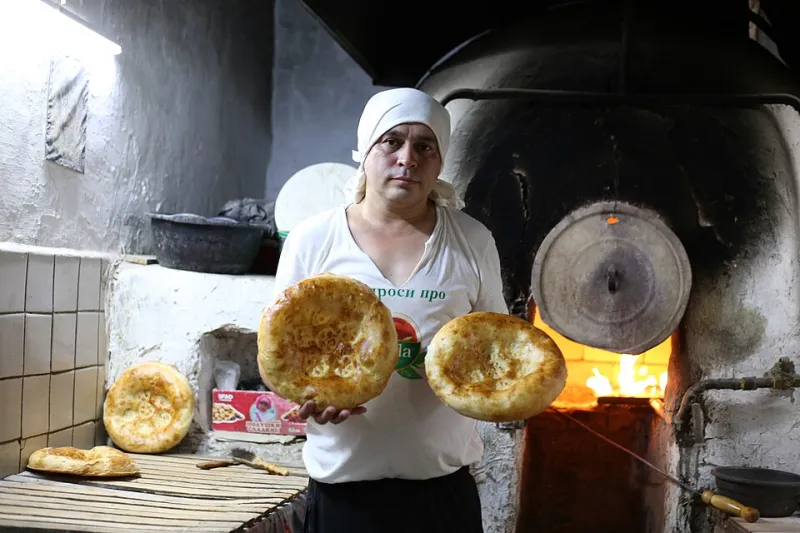
Photo: AIDEPCUL, CC BY 4.0, via Wikimedia Commons
Let's settle something right away: you can have the best pastrami in the city, the most perfectly balanced mustard, cheese aged to exactly the right sharpness—and a bad loaf of bread will undo every single one of those things. It's not dramatic to say this. It's just physics. The bread is the structure. It's the first thing your hands touch and the last thing your mouth finishes. Everything in between depends on it holding up its end of the deal.
And yet, bread is the most underappreciated element in sandwich culture. Let's fix that.
Regional Bread, Regional Identity
America doesn't have one sandwich tradition. It has dozens, and most of them were shaped—literally—by the bread available in a given region.
In New York, the water bagel is practically mythological. The city's water supply, with its specific mineral content and soft quality, is widely credited for producing a bagel with a particular chew and crust that you genuinely cannot replicate elsewhere. New York deli culture was built around this. A lox and cream cheese situation on a properly boiled-then-baked New York bagel is a different food category than the same ingredients on a grocery store imitation. Locals will tell you this with the kind of conviction usually reserved for things that actually matter. They're not wrong.
Down in Philadelphia, it's the hoagie roll that defines the local sandwich identity. Philly bakers developed a roll with a thin, crispy crust and a soft, airy interior that compresses just enough under pressure without going soggy. It's engineered, whether intentionally or not, for the specific demands of a heavily loaded Italian hoagie. The balance of crunch to give is exactly right. Try making a proper Philly hoagie on a French baguette and you'll understand the difference immediately—your jaw will tell you.
On the West Coast, and particularly around the Bay Area, sourdough has been the local bread religion since the Gold Rush era. San Francisco's sourdough has a distinctive tang from the wild yeast cultures that have been cultivated in the region for generations. Local delis and sandwich shops lean into this, and the slight acidity of a good sourdough actually does something useful—it cuts through rich meats and fatty cheeses in a way that milder bread simply can't.
New Orleans has its po'boy loaf, a bread so specific to that city's sandwich culture that bakeries there have essentially cornered a market. The exterior crackles. The interior is almost cottony. It's designed to absorb the debris and gravy of a dressed po'boy without disintegrating, which is a serious engineering challenge that local bakers have solved over generations.
What Mass-Market Bread Gets Wrong
Here's where things get honest. The bread sitting in the center aisle of most grocery stores is optimized for shelf life, not sandwich performance. The preservatives that keep it soft for two weeks are the same reason it compresses into a gummy paste under the weight of real deli ingredients. The uniform crumb structure means there's no textural variation—no crust to speak of, no chew, no character.
None of this is a secret. Deli owners know it. Bakers definitely know it. And if you've ever made a sandwich at home with grocery store bread and wondered why it didn't taste as good as the one from your neighborhood deli, the bread is almost certainly part of the answer.
The issue isn't just texture. It's flavor. Real bread—bread made with time, with natural fermentation, with quality flour—has a taste of its own. It contributes to the sandwich rather than just carrying it. Mass-market bread is essentially neutral filler, and neutral filler is not what you want as the foundation of something you're going to eat for lunch every day.
The Baker-Deli Partnership
The best neighborhood delis figured this out a long time ago, and the solution was simple: find a local baker and build a relationship.
In practice, this looks different everywhere. Some delis have arrangements with small artisanal bakeries that deliver fresh bread in the early morning hours. Others have their bread baked specifically to their specifications—a particular thickness, a particular crust level, a particular size that fits their signature sandwiches. A few ambitious operations bake their own bread in-house, which is a whole commitment but one that gives them total control.
What all of these approaches have in common is intentionality. The bread isn't an afterthought. It's a decision made before anything else on the menu is decided.
A deli owner in Portland, Oregon, switched from a commercial bread supplier to a local sourdough bakery a few years back and says the difference in customer response was immediate. "People started commenting on the bread specifically," she recalls. "Nobody had ever said anything about the bread before. That told me everything."
How to Actually Taste Your Bread
If you want to understand what makes bread good or bad for sandwiches, here's a simple test you can do at home. Take a slice of whatever bread you normally use and press it gently in the center with your thumb. If it stays compressed, it's going to go gummy under the weight and moisture of your fillings. If it springs back, you've got structure.
Next, eat a piece plain. Does it taste like anything? Good bread should have some flavor on its own—a little sweetness, some depth, maybe a slight tang. If it tastes like nothing, it's going to taste like nothing in your sandwich too.
Finally, look at the crumb structure—the interior of the bread when you pull it apart. A dense, uniform crumb with no variation means less texture. An open, irregular crumb with some air pockets means chew and character.
Bread Worth Seeking Out
If you're making sandwiches at home and want to level up without changing anything else, start here:
- Ciabatta for Italian-style sandwiches — the open crumb soaks up olive oil beautifully without getting soggy
- A proper rye loaf for anything pastrami or corned beef — the slight sourness is not optional, it's structural to the flavor
- A seeded Kaiser roll for deli-style chicken or egg salad — the seed crust adds texture contrast that changes the whole eating experience
- Real sourdough for anything with a strong, rich filling — the acidity is doing actual flavor work
- A soft hoagie roll from a local bakery for anything Italian — and if you can find one from a shop that's been making them the same way for decades, that's the one you want
The common thread: buy your bread from someone who cares about it. Farmer's markets, local bakeries, the in-store bakery at a good grocery store—any of these beat the center aisle.
The Bottom Line
A great deli sandwich is a system, and bread is the foundation of that system. When we think about what makes a sandwich memorable—what makes you drive past three other lunch options to get to your spot—the bread is quietly doing a huge amount of work.
Next time you order, take a second before you bite in. Notice the crust. Notice how it holds together. Notice whether the bread has a flavor of its own or just gets out of the way.
Then appreciate whoever made the decision to use it. That choice mattered more than you knew.