Your Regular Order, Your Community: How the Corner Deli Became America's Unlikely Town Square

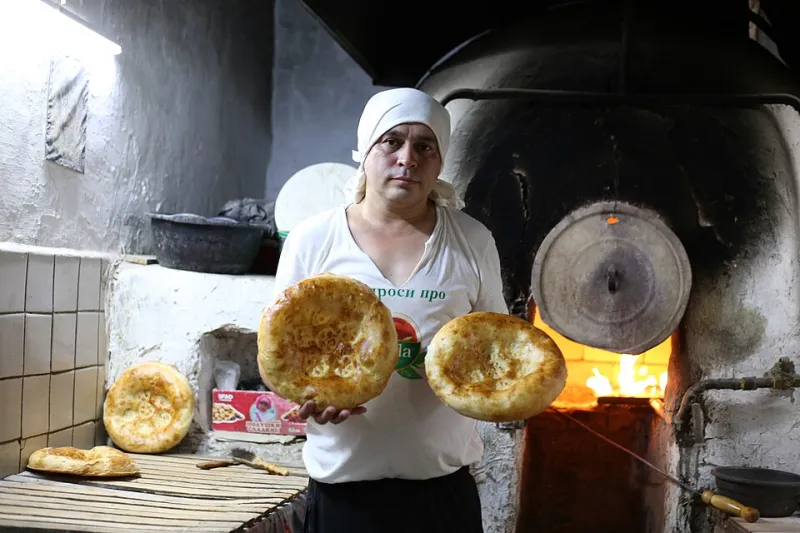
Photo: Dietmar Rabich, CC BY-SA 4.0, via Wikimedia Commons
There's a moment that happens in almost every neighborhood deli in America. Two people who would never cross paths anywhere else—different ages, different backgrounds, different everything—end up standing at the same counter waiting on their order. One of them says something about the mustard, or the weather, or the game last night. And suddenly, there's a conversation.
It sounds small. But ask anyone who's worked behind a deli counter for any length of time, and they'll tell you those small moments add up to something pretty significant.
The Counter as Common Ground
Delis have always been democratic spaces by design. You walk in, you wait your turn, you order your food. There's no VIP section. Nobody gets a better sandwich because of their zip code. The line is the great equalizer, and the person slicing your pastrami has heard it all—your bad morning, your good news, your opinion on the new development going up down the street.
In Chicago's Pilsen neighborhood, a deli called Manny's Carnicería & Deli has been a fixture for over three decades. The owner, a second-generation Mexican-American, says the lunch rush brings in everyone from construction crews to lawyers from the nearby firm to retirees who've been coming since the place opened. "The table by the window," he says, "I've seen people start arguments and walk out laughing. I've seen someone get a job offer over a Cuban sandwich. You can't plan that kind of thing. It just happens because everyone's here for the same reason—they're hungry and they trust us."
That trust is the key ingredient. It's built slowly, one correct order at a time, one remembered name at a time. And once it's there, the deli becomes something more than a lunch spot.
When Politics Hits the Pickle Jar
Anyone who thinks delis stay out of the big conversations hasn't spent much time in one. Political seasons, local elections, school controversies, neighborhood changes—these topics land on the deli counter just as often as a bag of chips.
In a small town outside Pittsburgh, a deli owner named Carol has kept a rule for 22 years: no political signs in the window, ever. Not because she doesn't have opinions—she'll tell you she has plenty—but because she made a decision early on that her deli needed to be a place where everyone felt welcome enough to come back.
"I've had people on completely opposite sides of things sit down and share a table because we were packed at noon and there was nowhere else to sit," she says. "And they'd start talking. Not always agreeing, but talking. That's worth more to me than any sign I could put up."
Her regulars have noticed. A retired union steelworker and a small business owner who'd clashed at a town meeting ended up becoming lunch buddies after a crowded Tuesday forced them to share a four-top. They still disagree on plenty. They still meet every Thursday for a Reuben.
The Regulars Who Aren't Regular Anymore
Something shifted during the pandemic years. Delis that had been humming along as community hubs suddenly had to go dark, go takeout-only, or close altogether. The loss wasn't just economic—it was social in ways that were hard to quantify until the spaces came back.
In Brooklyn, a deli that reopened after a long closure found that its customer base had scattered. Some had moved. Some had found other routines. The owner spent months essentially rebuilding the community from scratch, reaching out to old regulars, hosting small events, putting up a community board where locals could post notices.
"People don't realize what they had until it's gone," she says. "We had a guy who came in every morning for six years. Just coffee and a roll. When we reopened, he came in on the first day and just stood there for a second before he ordered. He said, 'I missed this more than I expected.' That hit me pretty hard."
The morning coffee-and-roll crowd, the lunch regulars, the after-school kids grabbing chips—each group forms its own micro-community within the larger one. The deli holds them all without trying too hard.
Why It Works Here and Not Somewhere Else
So what is it about a deli specifically? Coffee shops do some of this. Bars do some of this. But there's something about the deli format—the ordering, the waiting, the casual seating, the food that's fundamentally unpretentious—that lowers people's guards in a particular way.
Part of it is the food itself. A sandwich is not a status symbol. It's lunch. It's comfort. It's something your mom packed or something you grabbed on a busy day. Walking into a deli, you're on familiar emotional territory before you've even said a word.
Part of it is the staff. Good deli workers are a specific breed. They remember your order, they give you a hard time in a friendly way, they notice when you seem off. They're not therapists, but they're not nothing either.
And part of it is the physical design. Most delis aren't precious about their space. The tables are close together. The counter is visible. The smells are loud. There's no ambient music engineered to make you feel a certain way. It's just a room full of people eating, and somehow that's enough.
Keeping the Door Open
For neighborhood delis to keep serving this role, they need neighborhoods that support them. That means choosing the local spot over the chain when you can. It means being patient during the lunch rush. It means actually looking up from your phone when the person next to you says something.
Here at M&M Deli, we think about this a lot. Our counter has heard its share of stories—good days and rough ones, big news and small talk. We're not trying to solve anything. We're just here to make you a good sandwich and, if you feel like it, have a conversation.
That's always been the deal. Come in hungry. Leave a little more connected than you were.
The pickle's on the house.