From Anchovy Paste to Zeppole: What Your Deli Menu Is Really Trying to Tell You
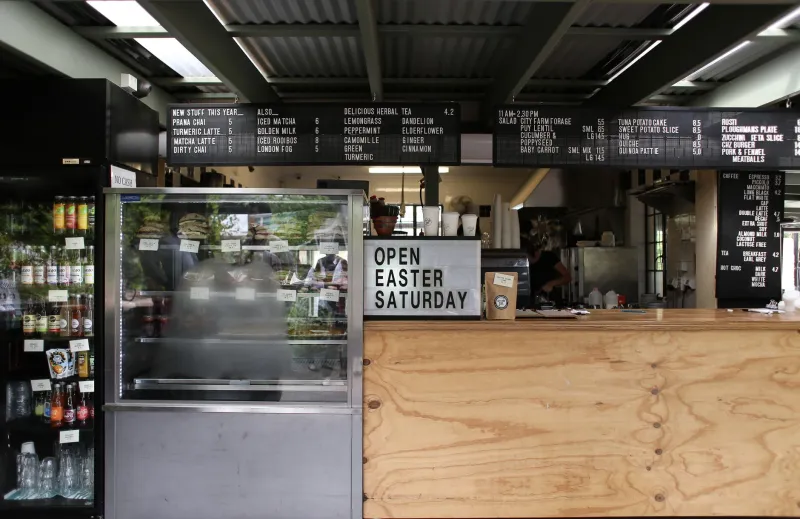
Next time you walk into your favorite deli and squint up at the chalkboard, try looking at it a little differently. Not as a list of lunch options, but as something closer to a local history exhibit. Because that's really what it is. Every item — the pickled herring, the roast pork with broccoli rabe, the matzo ball soup on Fridays — got there for a reason. Someone brought it. Someone asked for it. And eventually, enough people loved it that it stuck.
Menus don't happen by accident. They accumulate, the way neighborhoods do.
A Is for Anchovy (And the Italian Families Who Made It Non-Negotiable)
In delis that grew up alongside Italian-American communities — think South Philadelphia, the North End of Boston, parts of Brooklyn that still smell like fresh bread on Sunday mornings — anchovies aren't a controversial pizza topping. They're a foundation. You'll find anchovy paste tucked into dressings, spread thin on hoagies, or stirred into tuna salad in a way that makes the whole thing taste impossibly savory without you quite being able to name why.
That's not a coincidence. It's culinary memory. Southern Italian cooking, particularly from Calabria and Sicily, leaned heavily on preserved fish as a salt source. When those families settled into American cities and opened corner shops and sandwich counters, the anchovy came with them. It's still there if you know to look.
B Is for Brisket (And What It Remembers)
You can trace the arc of Jewish immigration across the Eastern Seaboard just by following the brisket. From the Lower East Side of Manhattan to neighborhoods in Chicago, Baltimore, and Miami, the slow-braised cut became a deli staple not because it was glamorous — it absolutely wasn't — but because it was economical, adaptable, and deeply tied to Shabbat cooking traditions brought over from Eastern Europe.
At its best, deli brisket is fork-tender, deeply seasoned, and piled high enough to require a little architectural planning before your first bite. It's also a direct line to a grandmother's kitchen in Warsaw or Vilnius, filtered through decades of American adaptation. When a deli puts brisket on the menu, they're not just selling a sandwich. They're keeping something alive.
C Is for Cuban (And the Block That Changed Everything)
Walk into a deli in Miami's Little Havana or certain pockets of Tampa's Ybor City, and the menu looks nothing like what you'd find in a New York Jewish deli or a Chicago Italian beef spot. The Cuban sandwich — roast pork, ham, Swiss, pickles, mustard, pressed flat on Cuban bread — tells the story of a community that built its own food culture on American soil and eventually exported it everywhere.
The Cuban is now so embedded in Florida deli culture that it shows up in gas stations and airport terminals. But the original version, the one that came out of the Cuban immigrant communities working in Ybor City's cigar factories in the late 1800s, was working-class food. Cheap, filling, and built for people who needed to eat fast and get back to work. Sound familiar? That's basically the whole origin story of the American deli sandwich.
G Is for Gyro (The Immigrant Dish That Became Everyone's Drunk Food)
The gyro's path into American deli culture is a relatively recent one, but it's a good example of how neighborhoods reshape menus in real time. Greek immigrants brought the rotisserie meat concept to American cities in the 1960s and 70s, and it took off fast — especially in Chicago, New York, and Baltimore, where Greek-owned diners and delis became neighborhood institutions.
Now the gyro sits comfortably alongside Italian beef and pastrami on menus across the country. It's been adapted, argued over, and occasionally mangled. But it's also proof that a deli menu is never finished. It keeps adding chapters.
P Is for Pork Roll (And the New Jersey Loyalty Oath)
If you're not from New Jersey, you may have no idea what pork roll is. If you are from New Jersey, you've probably already gotten into at least one argument about whether to call it Taylor Ham or pork roll. (It depends on which part of the state you're from, and yes, it matters deeply to people.)
Pork roll — a processed, cured pork product that predates most of us by about 150 years — is a regional deli staple that barely exists outside the Garden State. That's the point. It's hyper-local in a way that most food has stopped being. When a New Jersey deli puts pork roll, egg, and cheese on the menu, they're not just selling breakfast. They're asserting identity. They're saying: we know where we are, and we're proud of it.
R Is for Reuben (The Sandwich That Has Too Many Fathers)
Ask where the Reuben was invented and you'll get into an argument faster than you can slice the corned beef. Omaha claims it. New York claims it. There's a deli in Nebraska with a plaque. There's a New York deli family with a competing story. The truth is probably somewhere in between and not nearly as clean as either side wants it to be.
But here's the thing: the Reuben's contested origin is actually what makes it interesting. It reflects the way American deli culture developed — not in one place, not by one group, but through a hundred overlapping communities all building on each other's ideas. The sandwich became iconic because it worked. The sauerkraut, the Swiss, the rye, the Thousand Island — it all clicks. Who invented it almost doesn't matter anymore. It belongs to everyone.
Z Is for Whatever's Left (The Specials That Shouldn't Work)
Every deli has at least one item on the menu that defies easy categorization. The thing that sounds like a mistake but has a devoted following. The fusion that happened because someone was using up yesterday's leftovers and a regular happened to try it. The special that was only supposed to run for a week and somehow never came off the board.
These are the Z items — the end-of-the-alphabet stuff that doesn't fit neatly into any culinary tradition but somehow captures the spirit of the place better than anything else. At M&M Deli, we think those are often the best things on the menu. They're proof that a neighborhood's food culture is still alive, still moving, still making something new out of whatever's on hand.
The Menu Is the Neighborhood
A deli menu isn't a corporate document. It's not engineered by a focus group or optimized for profit margins. At its core, it's a record of who showed up, what they brought with them, and what everyone else eventually decided they wanted a taste of.
So next time you're standing at the counter trying to decide between the turkey club and something you've never ordered before — maybe order the something new. Ask where it came from. There's probably a story behind it that's worth hearing.
That's the thing about a good deli. It's never just lunch.