The Sandwich That Lives in Your Head Rent-Free
You haven't thought about it in months, and then one afternoon — maybe you catch a whiff of something briny near a grocery store, or someone mentions a neighborhood you grew up in — and suddenly it's right there. A specific sandwich. A specific deli. The exact weight of it in your hands, the way the wax paper crinkled, the particular combination of salt and fat that hit the back of your mouth and made everything feel briefly, completely right.
That sandwich probably doesn't exist anymore. The deli might be a nail salon now, or a parking lot, or something equally indifferent to your nostalgia. But the memory is as vivid as something that happened last week. Maybe more vivid.
You're not alone. Not even close.
Why Food Memory Is Different
Neuroscientists will tell you that smell is the sense most directly wired to the brain's memory and emotion centers. Unlike sight or sound, scent signals bypass the usual processing routes and land almost immediately in the limbic system — the part of the brain responsible for emotional memory. This is why the smell of warm pastrami or fresh rye bread doesn't just remind you of a deli. It transports you there.
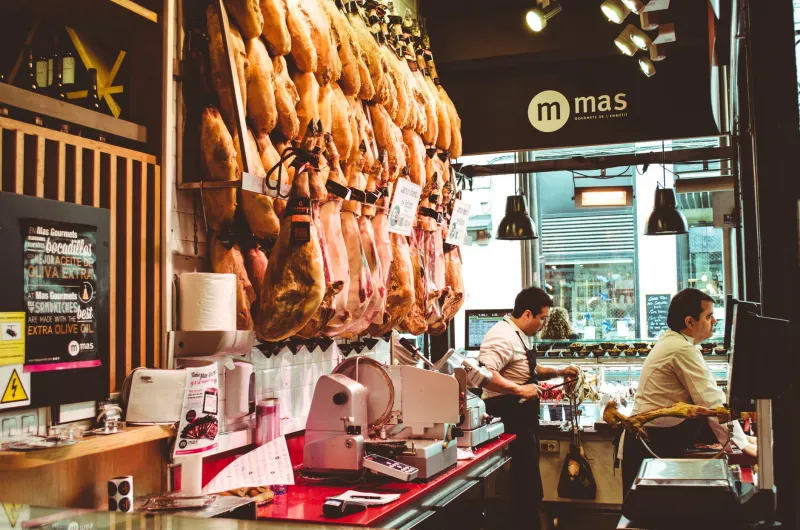
But deli food is particularly potent because it layers multiple sensory triggers at once. The smell of the meat. The sound of the slicer. The visual of the counter, the scale, the paper. The texture of a properly built sandwich — the resistance of good bread, the give of the meat, the cool crunch of a pickle. When all of those things hit simultaneously, the brain encodes the experience more deeply than it would a single-sense memory.
And then there's the emotional context. For a lot of people, deli memories are attached to specific relationships — a grandfather who took you every Sunday, a mother who ordered the same thing every time, a best friend you've lost touch with. The sandwich becomes a carrier for all of it.
Stories From the Search
We asked our readers to tell us about the sandwich they can't stop chasing. The responses came in fast.
One reader from Philadelphia described a roast pork sandwich from a corner deli that closed in the early 1990s. She's tried versions of it at a dozen different spots over thirty years. "Nobody gets the bread right," she wrote. "It was this specific roll — crispy outside, soft inside, almost sweet. I've described it to bakers and they look at me like I'm describing a unicorn."
A reader from Chicago remembered a Depression-era-style deli his family frequented in the '80s. The thing he misses most? A simple turkey sandwich on dark rye with a specific house mustard. "I've made turkey sandwiches a thousand times. I've bought every mustard on the shelf. It's not the ingredients. It's something about that place, that counter, that guy who made it the same way every time."
And then there's a reader from New York who moved to the Pacific Northwest twenty years ago and still dreams — literally dreams — about a pastrami sandwich from a Lower East Side deli that closed before she left. "I've been back to New York. I've eaten great pastrami. It's not the same and I've accepted that it will never be the same. That sandwich existed at a specific moment in time. It's gone. I'm grieving a sandwich and I'm not even embarrassed about it."
The Deli as Time Machine
Part of what makes deli food so emotionally loaded is the nature of the deli itself. Unlike a fast food chain — where every location is engineered for sameness — a neighborhood deli is intensely specific. The particular way a certain worker stacks meat. The house dressing that nobody else makes. The regulars you saw every time, whose names you never learned but whose faces were as familiar as neighbors.
When a deli closes, it doesn't just take the food with it. It takes a whole ecosystem of small, unremarkable moments that you only recognize as precious once they're gone. The sandwich was never just the sandwich. It was Tuesday lunch, and the guy behind the counter who always called you "chief," and the table by the window that you always tried to get, and the specific hour of a specific kind of afternoon that no longer exists.
You can't recreate that. But the memory of it — encoded in smell and taste and texture — stays accessible in a way that other memories often don't.
Can You Get It Back?
Sometimes, partially. Food historians and obsessive home cooks have reconstructed lost recipes with impressive accuracy. Old deli workers, tracked down through social media and neighborhood Facebook groups, sometimes remember their recipes with startling precision. There's something genuinely moving about a person describing, decades later, the exact ratio of spices in a brisket rub they made a thousand times.
But even the most faithful reconstruction can't fully replicate the original. The bread from the same bakery will taste slightly different because the baker has changed. The meat from the same supplier is a different animal. And you are a different person — older, with a different palate, eating in a different context.
What you can do is get close enough to remember clearly. Sometimes that's enough. Sometimes making an honest attempt at the lost sandwich — really researching it, sourcing the closest ingredients, eating it in a quiet moment — is a way of honoring the memory rather than replacing it.
The Deli That Never Closes
Here's the thing about the sandwich that lives in your head: it's not really about the food. Or rather, the food is the door, and behind it is everything else — the people, the place, the version of yourself who was there. Deli food has a way of holding all of that more securely than almost anything else.
The deli in your memory is always open. The counter is always staffed. The sandwich is always exactly right.
Maybe that's enough. Or maybe it's reason enough to walk into your neighborhood deli today, pay attention to every detail, and start building a new memory worth keeping for the next thirty years.
Order something good. Eat it slowly. Notice everything.
You'll thank yourself later.