The Tools in the Apron: What Deli Pros Keep Close That You'll Never See on a Menu Board
Every trade has its hidden toolkit. Carpenters have their favorite pencil. Chefs have a knife they'd pull from a burning building before anything else. And deli workers — the people who keep your neighborhood counter running through a Friday lunch rush that would break most people — have their own collection of small, unglamorous tools that separate a good sandwich from a great one.
None of it makes the menu board. None of it ends up in photos. But ask any veteran behind the counter what they couldn't work without, and you'll get a very specific, very passionate answer.
The Knife That Belongs to Nobody Else
The slicer handles most of the volume, sure. But a deli worker's personal knife is something else entirely — a tool so specific to its owner that borrowing it would feel like wearing someone else's shoes.
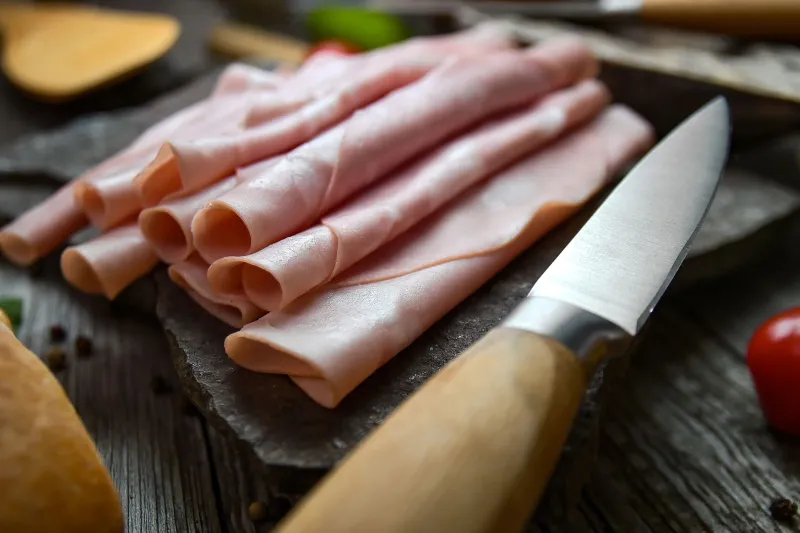
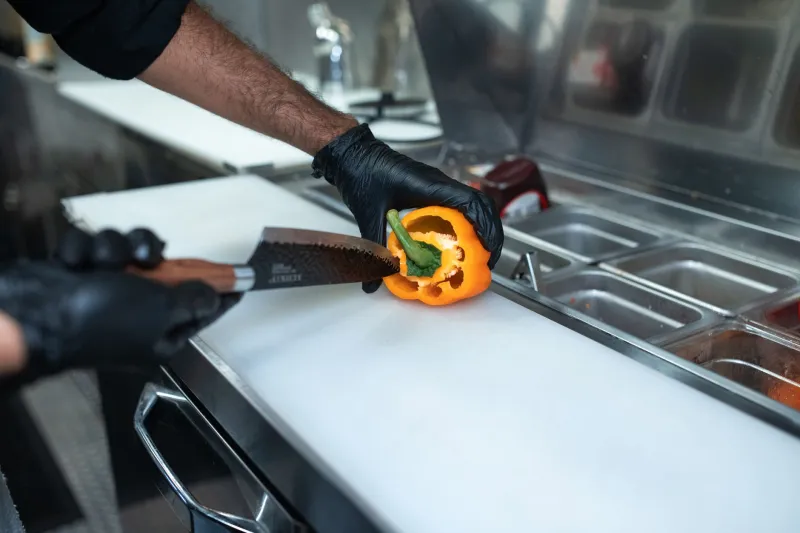
Most experienced deli workers carry a boning knife or a flexible slicing knife that they've maintained themselves for years. The key word is maintained. A sharp knife isn't just faster — it's safer, more precise, and produces cleaner cuts that actually affect how a sandwich tastes. A ragged edge on a tomato or a torn piece of meat changes the texture in your mouth in ways that seem small but add up.
"I sharpen mine every single morning before the rush," says one counter worker who's been at a family-owned deli in New Jersey for going on fourteen years. "Takes me maybe five minutes. It's like stretching before a run. You skip it and you feel it."
The sharpening kit — a whetstone, a honing steel, sometimes a leather strop — is part of the personal toolkit most customers never see. It lives under the counter or in a bag that comes in with the worker every shift.
The Thermometer Nobody Talks About
Food safety is the unglamorous backbone of every good deli. And the tool that enforces it isn't dramatic — it's a small instant-read thermometer, often clipped to an apron or tucked into a breast pocket, that gets pulled out dozens of times a day.
Professional deli workers check temperatures constantly. Not because they're paranoid, but because it's the difference between serving something right and serving something wrong. Roast beef that's been in the case too long. A turkey breast that's sitting at the edge of the safe zone. A soup that needs another five minutes before it's ready to serve.
"Customers think we just know by looking," said one deli manager in the Chicago area who's been in the business for over two decades. "And experienced workers do develop a sense for it. But you never rely on that alone. The thermometer is always the last word."
For home cooks who take their deli-style cooking seriously, this is worth borrowing. A good instant-read thermometer — the kind professionals use, not the dial type that takes thirty seconds to settle — costs around $25 and will change how you cook meat. Full stop.
The Bench Scraper: Most Underrated Tool in the Building
Ask a pastry chef what their most-used tool is and there's a decent chance they say bench scraper. Ask a deli worker the same question and you might get the same answer.
A bench scraper — that flat, rectangular blade with a handle on top — does a dozen things at a deli counter. It cleans the prep surface in one quick motion. It portions soft spreads and sliced meat into precise amounts without touching the food. It moves product from cutting board to container efficiently. It scrapes down the sides of a mixing bowl.
The best ones are simple: a solid stainless steel blade, a comfortable grip, the right amount of flex. Workers who've been doing this long enough have opinions about their bench scraper the way other people have opinions about their car.
Portioning Without a Scale
Here's something that surprises a lot of people: experienced deli workers often don't use the scale for every single portion. Not because they're cutting corners, but because after thousands of repetitions, their hands are calibrated.
This is called portioning by feel, and it's a skill that takes years to develop. A veteran worker can pull what will be almost exactly six ounces of sliced turkey without looking at a scale because they've done it so many times that the weight has become physical memory.
The scale is still there — it's used for customer-facing transactions and quality checks. But in the flow of a busy rush, the hands work faster than any machine.
"I check myself against the scale a few times a day," one deli worker explained. "Just to make sure I'm not drifting. It's like tuning an instrument. You do it regularly so you stay accurate."
Home cooks can develop a version of this too. If you make the same recipe regularly, start weighing your portions consciously and paying attention to what they feel like in your hand. Over time, you'll need the scale less.
Station Organization as a Tool
This one's less tangible but arguably more important than any physical object: the way a professional deli worker organizes their station is itself a tool. Everything has a place. Everything within reach is there for a reason. The things used most often are closest to the body. The things used occasionally are a half-step away.
This isn't tidiness for its own sake — it's speed. During a rush, a worker who has to hunt for the mustard or reach across their body for the bread knife loses seconds on every single order. Multiply that by a hundred orders and you've lost significant time.
"I reset my station the same way every morning," said one counter worker. "Doesn't matter who set up the night before. I need to know exactly where everything is without looking. That's the whole game."
For anyone who cooks at home and feels like they're always a step behind — always reaching, always searching — this is the fix. Set up your mise en place before you start. Put things where they make sense for your body and your workflow. You'll cook faster and with less frustration.
The Apron Pocket Inventory
Finally, there's the apron itself — and specifically, what lives in its pockets. Among the workers we talked to, the recurring items were: a permanent marker for labeling containers, a small notepad for phone orders, a folded paper towel for quick wipes, and the thermometer already mentioned.
Small things. Practical things. Nothing you'd ever notice from the other side of the counter.
But that's sort of the point, isn't it? The best work is invisible. You don't notice the knife because it's so sharp that every cut is clean. You don't notice the station setup because everything arrives exactly when it should. You don't notice the thermometer because the food is always right.
You just notice that the sandwich is perfect.
And you come back next week.